

Integrated Agentic Business Processes Transform the Supply Chain Operating Model
Supply chains have spent decades digitalizing transactions, linking systems, and expanding visibility across trading partners. The next performance constraint is the work required to interpret changing conditions, coordinate decisions, and respond across organizational boundaries. Every order change, shipment delay, forecast revision, inventory movement, invoice discrepancy, or quality event can create a chain of decisions that spans functions, companies, and systems. As supply networks become more distributed, this coordination burden grows faster than transaction volume alone - increasing cost, slowing response, consuming expert capacity, and putting service, inventory, working capital, resilience, and revenue performance at risk.
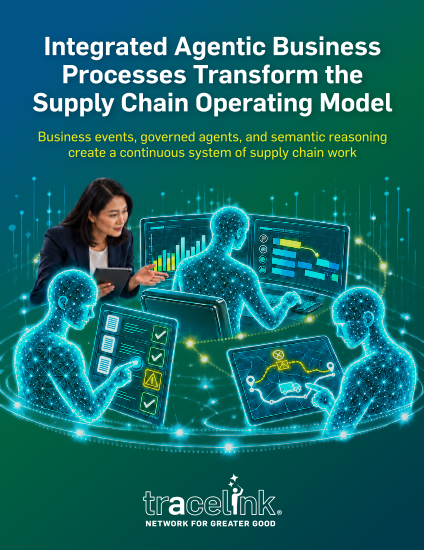
The Agentic Supply Chain Operating Model defines the way human teams and governed OPUS Agents perform work together. The Agentic Supply Chain Operating System, built on the OPUS Platform, provides the agentic environment and software foundation required to implement and scale that model. Integrated Agentic Business Processes bring these concepts together by linking business activity, operational context, knowledge, reasoning, governance, and measurable outcomes into continuously managed supply chain work.
Read all about this, and more, in this report.


Artificial Intelligence, Supply Chain, Supply Chain Management Software
Artificial Intelligence, Supply Chain, Supply Chain Management Software